Contact
Work on the balance with us
We welcome conversations with researchers, schools, and developers who care about what stays physical and what goes digital in learning.
Get in touchEducation is moving wholesale onto screens, and the costs are beginning to show — Sweden is now reinvesting in paper textbooks and handwriting. But the answer is not to turn back.
Students distracted by devices scored 15 points lower in math. Students using them deliberately for learning scored 14 points higher. Same screens, opposite results — what differs is the design. — OECD, PISA 2022
So this lab works on the design. Handwriting builds what typing cannot; AI reads and responds at a scale no teacher can. Every medium has work it does best — we find out which, with evidence, and build classrooms around the answer.
BDL Lab — Balanced Design for Learning — is a research lab at the Marsal Family School of Education, University of Michigan. We study student learning, teacher learning, and adult learning — and our work spans the three places where the choice of medium shapes all three: what learners work with, how they are supported, and how we know they are growing.
Evidence-based curriculum that keeps hands-on work — paper, worksheets, manipulatives — where it supports learning best, printed from the same source that powers the digital pipeline.
AI that analyzes student work, spots learning gaps, and returns time to teachers — guiding students with questions rather than answers. A partner, never a replacement for professional judgment.
Learning progressions and AI scoring of handwritten student work, so decisions about physical and digital media rest on measurement — not on intuition.
Across low-income schools in Alabama, students work on printed, hands-on science materials — writing, drawing, and building by hand. Their work is then read by an AI assessment engine that gives teachers timely insight through a dashboard.
Digital does the authoring, scoring, and feedback. Paper sits in front of the student.
Project partners and team members will be announced.
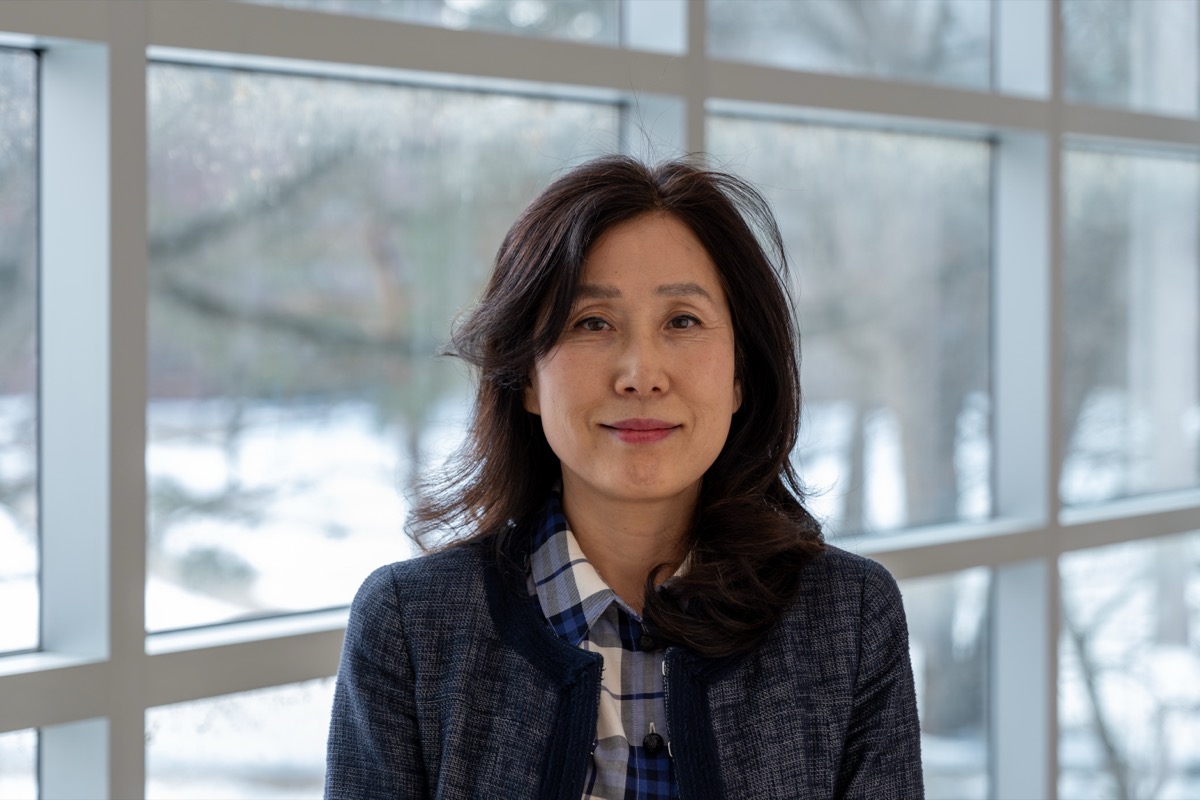
Dr. Shin researches how people learn — students, teachers, and adults — and designs environments that help all learners, especially in STEM, grow into confident problem solvers. Her work spans conceptual frameworks, research methodologies, and technology-integrated learning environments.
For twenty years she has built and validated learning progressions — empirical maps of where learners are — the measurement backbone that lets this lab decide media questions with data.
AI analysis of student answers, feedback generation, and uncertainty estimation for the assessment engine.

Edurix develops the technology that connects the physical world of learning with the digital — augmented worksheets that AI can read and respond to, and AI-assisted science labs where students handle real instruments while sensors and AI measure, record, and support the work.
We welcome conversations with researchers, schools, and developers who care about what stays physical and what goes digital in learning.
Get in touch